

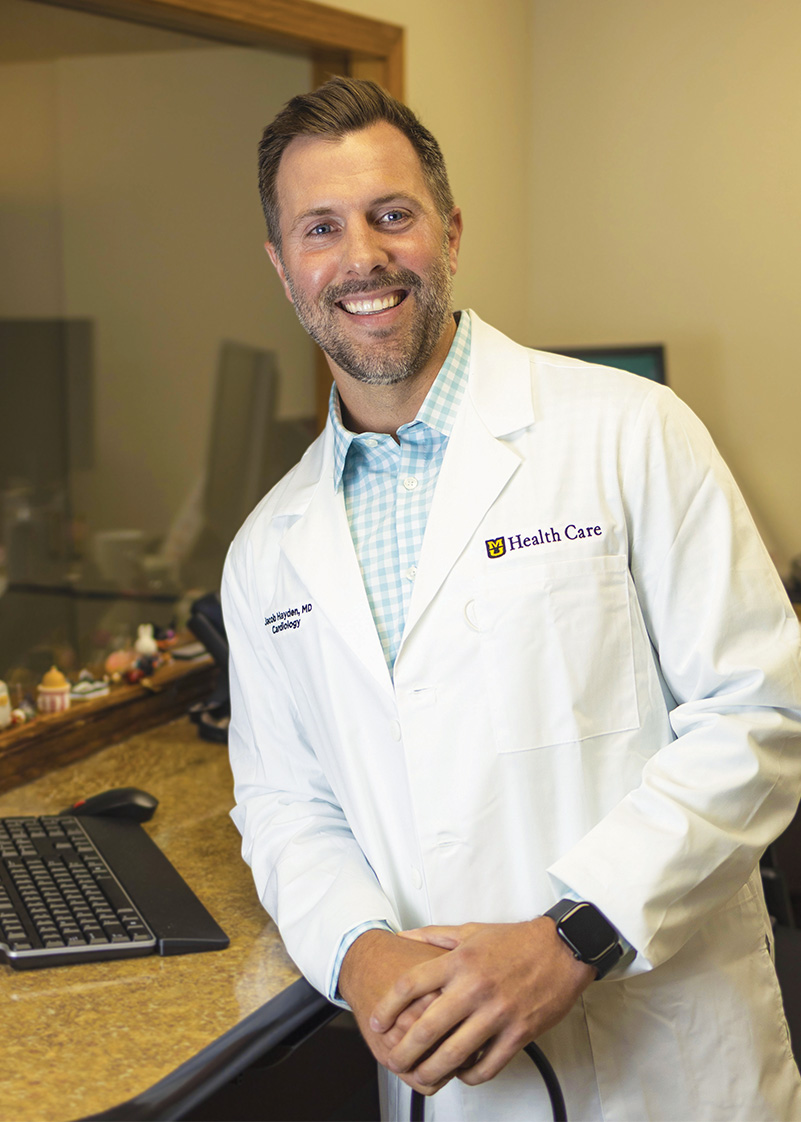
Growing up in Perryville, a small town in southeast Missouri, I spent countless hours around horses and was convinced I would become a veterinarian. Caring for others, whether people or animals, always felt like the natural path for me. Looking back, countless visits to doctors’ offices after my brothers’ injuries, along with a broken arm of my own during high school football, helped spark my interest in medicine.
Before medical school, I worked as both a phlebotomist and an emergency department scribe. I initially thought emergency medicine was my calling, but everything changed once I discovered cardiology. I quickly realized the heart influences nearly every aspect of a person’s health.
What drew me most to cardiology was the opportunity to care for patients during some of life’s most uncertain moments. One day someone may be exercising, coaching their child’s ballgame, or planning retirement, and the next they’re facing an unexpected diagnosis. During those moments, patients need more than medical expertise. They need clarity, reassurance, and hope. Helping people navigate those challenges and prevent heart disease before it changes the course of their lives is what makes this profession so meaningful to me.
The most rewarding part of my work is building relationships with my patients and earning their trust. Every patient brings different goals and concerns. My goal is to care for each person the same way I would want a member of my own family to be treated by explaining their condition, discussing treatment options, and helping them feel confident in their care.
Outside of medicine, my greatest joy is spending time with my wife and our two children. We enjoy traveling, spending time outdoors, and making memories together. Jefferson City reminds me of the community where I grew up. It’s a wonderful place to raise a family, build meaningful relationships, and care for generations of families.
Throughout my career, I have been shaped by exceptional mentors, dedicated colleagues and, perhaps most importantly, my patients. Every conversation, challenge, and success has helped me become a better physician. If I could leave readers with one piece of advice, it would be this: Don’t wait until something feels wrong to take care of your heart. Staying active, eating well, managing cholesterol and blood pressure, and keeping up with routine checkups can make an enormous difference. Prevention is one of the most powerful tools we have in cardiovascular medicine, and my hope is to be a physician my patients can trust.